

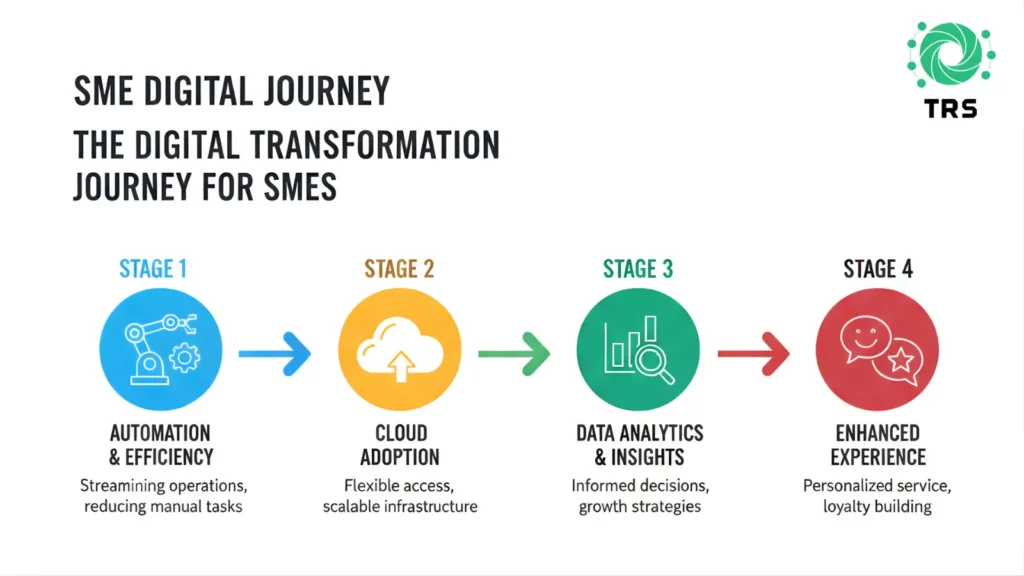
Digital transformation is no longer limited to large enterprises with big budgets. Small and medium-sized businesses are also expected to operate digitally, respond quickly to customers, and use technology to stay competitive. The good news is that modernization does not require heavy spending. With the right approach and smart use of digital transformation services, SMEs can transform their operations without financial pressure.
This guide explains how SMEs can modernize step by step while keeping costs under control.
What Digital Transformation Means for SMEs
For SMEs, digital transformation focuses on using technology to improve daily operations and customer experience. It is about working smarter rather than spending more.
Digital transformation for SMEs may include
• Automating repetitive tasks
• Improving communication with customers
• Using cloud-based business tools
• Making data driven decisions
• Creating simple digital products to support growth
The goal is to solve real business problems in a practical and affordable way.
Why SMEs Often Hesitate to Modernize
Many small businesses delay digital transformation due to uncertainty and budget concerns. Common reasons include
• Limited financial resources
• Lack of technical expertise
• Fear of implementation failure
• Unclear return on investment
While these concerns are understandable, delaying modernization often leads to higher long-term costs. Inefficient workflows and outdated systems slow growth and reduce competitiveness.
Start with Clear Business Goals
Successful digital transformation begins with clarity. Instead of choosing tools first, SMEs should identify where improvements are needed.
Ask simple questions such as
• Which processes waste the most time
• Where do customers face delays or confusion
• Which tasks can be automated easily
• What systems are outdated or inefficient
Once goals are defined, digital transformation services can be applied strategically to deliver real value.
Use Cloud Technology to Keep Costs Low
Cloud solutions have made modernization affordable for SMEs. They reduce the need for expensive infrastructure and offer flexible pricing.
Benefits of cloud technology include
• Lower upfront investment
• Pay only for what you use
• Easy scalability as the business grows
• Reduced maintenance effort
Cloud based tools support finance, sales, communication, and collaboration, making them ideal for budget conscious SMEs.
Control Development Costs Through Smart Outsourcing
Building digital solutions internally can be expensive. Many SMEs choose cost effective software development outsourcing to access skilled professionals without long term overhead costs.
Outsourcing helps SMEs
• Reduce development and hiring expenses
• Speed up project delivery
• Access experienced technical talent
• Focus internal teams on core activities
When managed correctly, outsourcing becomes a strategic advantage rather than a cost burden.
Build Small and Test Ideas Quickly
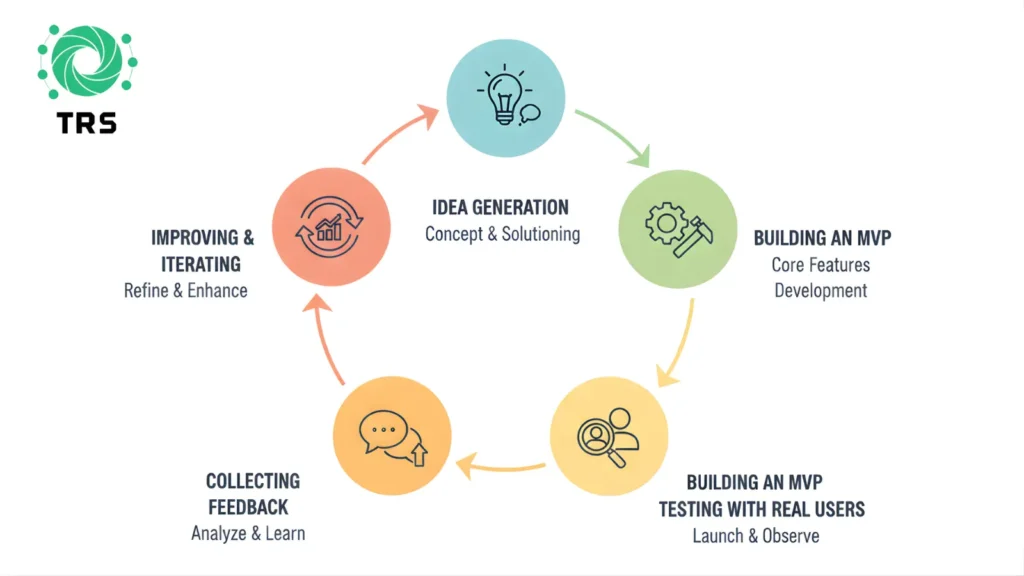
Large scale digital projects often increase both risk and cost. A smarter approach for SMEs is to start small and validate ideas early. Many businesses successfully build an MVP in 30 days so they can:
• Test ideas in real market conditions
• Collect user feedback early
• Avoid unnecessary features
• Reduce financial risk
This approach ensures that money is invested only in solutions that deliver value.
Automate Processes That Deliver Fast Results
Automation is one of the most affordable ways to improve efficiency. SMEs should focus on automating tasks that consume time and resources.
Common automation opportunities include
• Invoicing and billing
• Customer support systems
• Email and marketing workflows
• Inventory and order tracking
Automation reduces manual effort, improves accuracy, and allows teams to focus on growth activities.
Use Data to Make Smarter Decisions
Digital transformation is incomplete without data. Even small businesses generate valuable data that can improve decision making.
Data driven tools help SMEs
• Understand customer behavior
• Measure sales and marketing performance
• Identify operational inefficiencies
• Plan future growth more effectively
Digital transformation services that include analytics ensure data is converted into actionable insight.
Choose the Right Technology Partner
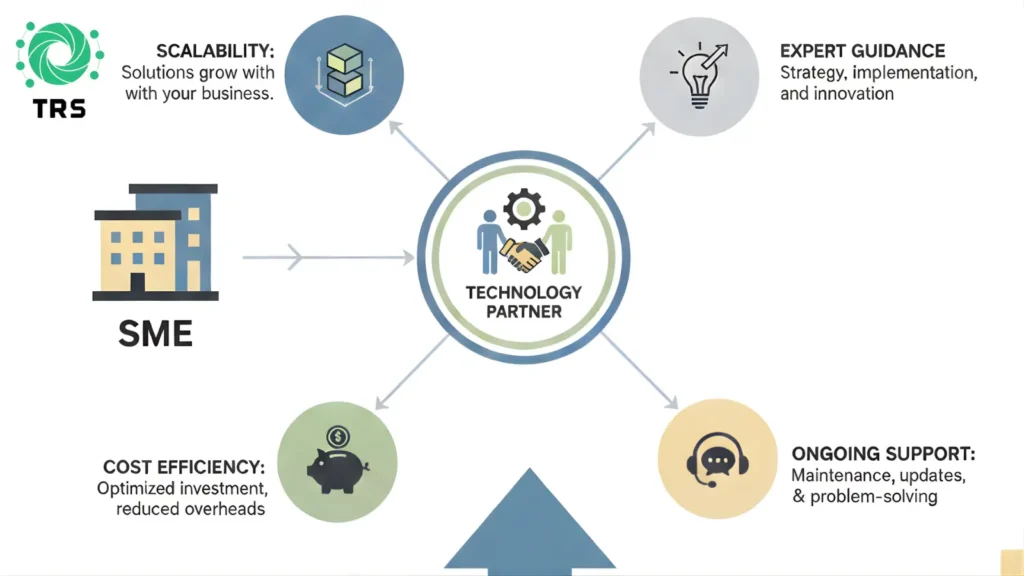
The success of digital transformation depends heavily on who implements it. Choosing the right tech partner for long term projects helps SMEs avoid costly mistakes.
A reliable technology partner
• Understands SME budgets and constraints
• Focuses on long term scalability
• Recommends practical and affordable solutions
• Provides ongoing support and guidance
The right partnership ensures digital transformation remains sustainable.
Keep Systems Simple and Scalable
Complex systems often increase costs and reduce adoption. SMEs benefit most from simple and user-friendly solutions.
A practical approach includes
• Building only essential features
• Avoiding over customization
• Ensuring ease of use for employees
• Planning for future growth
Simplicity improves efficiency and keeps maintenance costs low.
Measure Results and Improve Continuously
Digital transformation is not a onetime activity. SMEs should track performance regularly.
Important metrics include
• Productivity improvements
• Cost savings
• Customer satisfaction
• Revenue growth
Tracking results helps businesses refine strategies and invest budgets more effectively.
How Digital Transformation Services Help SMEs
Professional digital transformation services provide expertise and structure. They help SMEs plan, implement, and optimize digital initiatives without unnecessary spending.
These services support SMEs by
• Creating clear transformation roadmaps
• Recommending cost efficient solutions
• Reducing trial and error
• Supporting long term optimization
Expert guidance ensures better results with controlled budgets.
Final Thoughts
Digital transformation does not require huge budgets. It requires smart planning, clear goals, and the right execution strategy. SMEs that modernize gradually and strategically can compete effectively in a digital environment. By using cloud tools, automation, outsourcing, MVP development, and reliable digital transformation services, SMEs can modernize confidently and sustainably. Modernization is not about spending more. It is about making smarter decisions.