

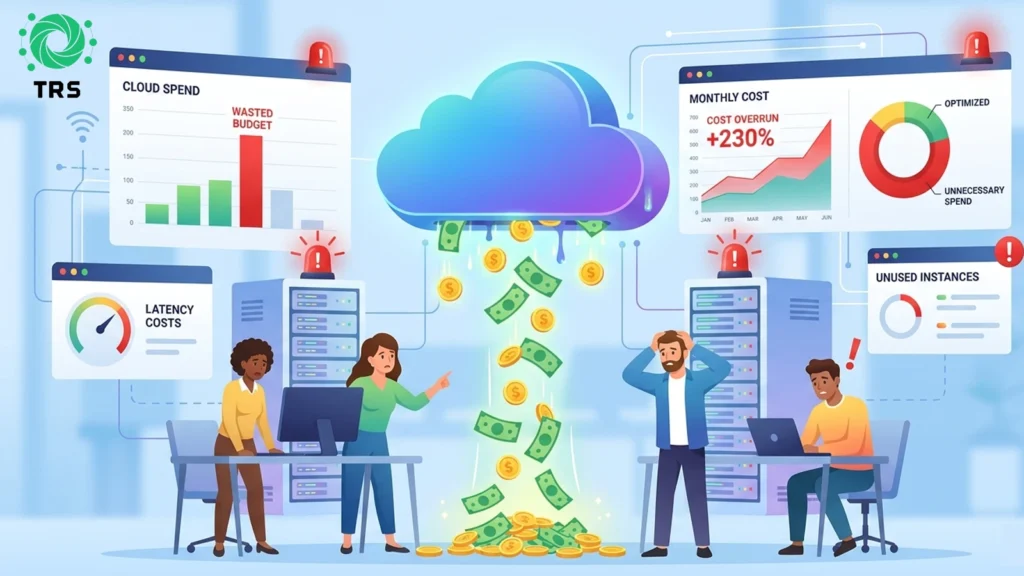
In the modern entrepreneurial landscape, cloud computing is no longer a luxury but the fundamental infrastructure upon which innovation is built. It serves as the digital backbone for emerging enterprises, facilitating rapid scalability, operational flexibility, and high-speed iteration. However, a stark reality has emerged: despite these inherent advantages, a staggering 31% to 40% of cloud spend is estimated to be wasted by startups annually, according to the 2026 State of the Cloud Report.
This fiscal leakage is rarely the result of a single error; rather, it is driven by inefficient operational practices and a systemic lack of strategic foresight. To fully understand how cloud computing essentials unlock benefits, cost optimization must be viewed as a foundational pillar rather than an afterthought. Furthermore, when infrastructure is meticulously aligned with SaaS development frameworks and holistic digital transformation objectives, cloud investments are transformed from a financial burden into a direct engine for business expansion.
The Root Causes of Cloud Financial Leakage
1. The Trap of Resource Overprovisioning
Perhaps the most prevalent catalyst for overspending is the tendency toward overprovisioning. In a high-stakes environment where downtime can result in catastrophic user churn, “better safe than sorry” becomes the unofficial mantra. Consequently, significantly more computing power, storage, and bandwidth are allocated by engineering teams than are actually required by the workload.
While this approach is often perceived as a safety net, it essentially translates to paying for “phantom capacity”, resources that remain dormant yet billable. In 2026, industry benchmarks suggest that the average production cluster operates at only 10% CPU utilization, meaning 90% of the paid power is effectively discarded. To mitigate this, rigorous and regular analysis of utilization metrics is required.
2. The Visibility Gap in Real-Time Spending
A significant portion of cloud waste is fueled by a lack of granular, real-time cost visibility. In the early stages of a startup, priority is almost exclusively given to speed-to-market and aggressive product launches. Financial tracking is frequently sidelined in favor of feature deployment.
As a result of this “velocity at all costs” mindset, cloud expenditures often go undetected until the final billing statement arrives. Without the implementation of sophisticated tracking tools, identifying specific services, teams, or experimental branches that are driving costs becomes an impossible task. This lack of transparency leads to an environment of uncontrolled spending that can quickly deplete a startup’s runway.
3. Structural Inefficiencies in Cloud Architecture
The financial efficiency of a startup is often dictated by its underlying architecture. Higher operational costs are frequently incurred due to poorly designed or “lift-and-shift” systems that fail to leverage cloud-native capabilities.
Many organizations continue to rely on monolithic structures and unoptimized legacy databases which are fundamentally ill-suited for the cloud’s elastic nature. By contrast, a well-planned, modern architecture ensures that scalability and cost-efficiency are “baked in” to the code, rather than being forced upon it later through expensive patches.
4. The “Ghost” Resource Problem
Unused or orphaned resources represent a silent, persistent drain on capital. In the fast-paced world of SaaS development, temporary instances are frequently created by developers for testing or staging purposes. Unfortunately, these resources are often forgotten and left running long after the project has concluded. These idle assets continue to generate monthly charges without contributing a single cent of value to the company’s bottom line.
Advanced Strategies for Cloud Cost Recovery
To rectify these inefficiencies and align with the latest Google standards for operational excellence, startups must move beyond reactive cost-cutting and adopt a proactive FinOps (Financial Operations) mindset.
Implementing Real-Time Monitoring and Observability
The primary step toward total optimization is the attainment of absolute visibility. Startups are encouraged to deploy advanced cost-monitoring platforms that provide real-time telemetry. These tools do more than just track spending; they utilize predictive analytics to identify anomalies, set automated budget alerts, and provide actionable insights that empower data-driven leadership.
Dynamic “Right-Sizing” of Infrastructure
Regular reviews of resource allocation against actual consumption patterns are non-negotiable. “Right-sizing” ensures that the infrastructure is perfectly calibrated to the demand. In 2026, this is increasingly handled by AI-driven automation tools that recommend optimal instance types and sizes, ensuring that waste is minimized without compromising the user experience.
Transitioning to Cloud-Native Architectures
Efficiency can be significantly boosted by adopting modern paradigms such as microservices and serverless computing. Unlike traditional models, these approaches allow for the granular scaling of specific components. If one feature of a SaaS application experiences a spike in traffic, only that component is scaled, preventing the unnecessary (and expensive) expansion of the entire system.
The Power of Automation and Scheduling
Manual resource management is both prone to error and inherently unscalable. Waste can be effectively prevented through the use of automated schedules. For example, non-production environments, such as development and staging, can be automatically shut down during off-business hours. This single tactic can reduce environment-related costs by up to 70%.
Granular Tagging and Accountability
A culture of accountability is fostered when resources are accurately tagged by team, project, or department. This allows for precise cost allocation (showback/chargeback), enabling leadership to pinpoint which business units are the most resource-intensive. When engineers have visibility into the cost of their code, financial discipline naturally follows.
Strategic Purchasing and Expertise
Leveraging Reserved Instances and Savings Plans
While on-demand pricing offers maximum flexibility, it is also the most expensive way to consume cloud services. Significant savings, often ranging from 30% to 60%, can be unlocked by committing to Reserved Instances (RIs) or long-term Savings Plans for predictable workloads. By balancing on-demand instances for spikes and reserved capacity for the “baseline,” startups can optimize their burn rate effectively.
Investing in Specialized Cloud Knowledge
As cloud ecosystems become increasingly complex, the value of in-house expertise cannot be overstated. Whether through hiring dedicated DevOps/FinOps professionals or upskilling existing talent, having a team that understands the nuances of cloud pricing models and architectural best practices is a critical investment. Skilled professionals ensure that the infrastructure is not just functional, but fiscally optimized.
Conclusion: Cloud Efficiency as a Competitive Edge
Wasting nearly half of a cloud budget is a common pitfall for modern startups, but it is by no means an inevitability. By prioritizing visibility, adopting elastic architectures, and ensuring that every dollar spent on the cloud is synchronized with broader digital transformation goals, startups can reclaim their lost margins.
Effective cloud management does more than just save money; it sharpens the company’s competitive edge by freeing up capital for innovation and ensuring that the platform can scale gracefully as the user base grows. In the 2026 digital economy, the most successful startups won’t just be those with the best ideas, but those with the most efficient engines to power them.