

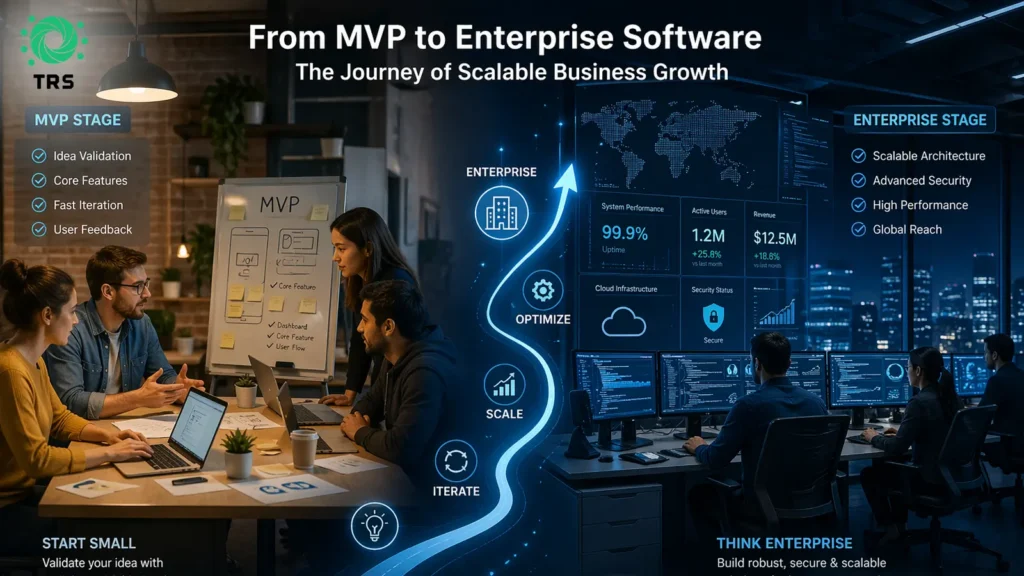
In today’s fast-paced digital economy, businesses must evolve quickly to stay competitive. The journey from a Minimum Viable Product (MVP) to enterprise-grade software is a critical phase that determines long-term success. Startups often begin with a simple idea, but turning that idea into a scalable, high-performance system requires the right strategy, technology, and execution.
At the early stage, many companies seek IT Consulting Services to define a clear roadmap, choose the right tech stack, and align their product with business goals. This initial guidance helps reduce risks and ensures a smoother transition from concept to execution.
Understanding the MVP Stage
An MVP is the foundation of your product journey. It focuses on delivering the core value of your idea with minimal features.
Why MVP Matters:
- Validates your business idea
- Reduces development cost
- Speeds up time-to-market
- Attracts early adopters
Startups aiming to build your MVP quickly gain a competitive advantage by entering the market faster and learning from real users instead of assumptions.
Building MVP with the Right Approach
Speed alone isn’t enough—your development approach matters just as much. Modern product teams focus on building MVP using Agile methodology to ensure flexibility and continuous improvement.
Benefits of Agile MVP Development:
- Faster iterations through sprints
- Continuous user feedback integration
- Ability to pivot quickly
- Better collaboration across teams
Agile allows businesses to refine their product step-by-step, ensuring that every update is aligned with user needs.
Speed as a Competitive Advantage
Time-to-market plays a crucial role in startup success. Many founders believe that launching quickly compromises quality, but that’s not always true. With the right strategy, building an MVP in 30 days is achievable.
How to Launch Faster:
- Focus only on core features
- Use pre-built components and frameworks
- Prioritize functionality over perfection
- Work in short development cycles
Launching fast allows you to test your idea in real-world conditions and iterate based on actual user behavior.
Transitioning from MVP to Growth Stage
Once your MVP gains traction, the next step is scaling your product. This phase involves improving performance, expanding features, and preparing your system for a growing user base.
Signs You’re Ready to Scale:
- Increasing user demand
- Consistent positive feedback
- Revenue generation
- Market validation
At this stage, your goal shifts from validation to growth and optimization.
Building Scalable Architecture
Scaling requires a strong technical foundation. A poorly structured system can fail under increased demand.
Key Elements of Scalable Software:
- Cloud-based infrastructure
- Micro services architecture
- API-driven development
- Efficient database management
Investing in scalability early helps avoid costly rework in the future.
Leveraging Data for Growth
As your product grows, data becomes your most valuable asset.
Important Metrics to Monitor:
- User engagement
- Retention rate
- Customer acquisition cost (CAC)
- Lifetime value (LTV)
These insights help you make informed decisions and continuously improve your product.
Scaling Teams and Operations
Your team structure must evolve along with your product.
Focus Areas:
- Hiring experienced developers
- Implementing DevOps practices
- Streamlining communication
- Using project management tools
A well-organized team ensures faster delivery and better product quality.
Strengthening Security and Compliance
As your user base expands, security becomes a top priority.
Essential Security Practices:
- Data encryption
- Secure authentication systems
- Regular vulnerability testing
- Compliance with global standards
Strong security builds trust and protects your business from potential threats.
From Product to Enterprise Software
Enterprise software is built for scale, reliability, and performance.
Features of Enterprise Systems:
- High availability and uptime
- Seamless third-party integrations
- Scalable infrastructure
- Advanced security frameworks
At this level, your software must support large-scale operations without performance issues.
Automation and AI Integration
Automation is transforming how businesses operate in 2025.
Use Cases:
- AI-powered customer support
- Workflow automation
- Predictive analytics
- Personalized user experiences
These technologies improve efficiency and enhance customer satisfaction.
Common Scaling Mistakes
Avoiding common pitfalls can save time and resources.
Mistakes to Watch:
- Scaling without proper validation
- Ignoring user feedback
- Weak infrastructure planning
- Lack of clear product vision
Learning from these mistakes helps ensure smoother growth.
Future Trends in Software Scaling
The future of software development is rapidly evolving.
Emerging Trends:
- AI-first development
- Server less architecture
- Low-code platforms
- Hyper-personalization
Adapting to these trends can give your business a significant competitive edge.
Conclusion
Scaling from MVP to enterprise software is a journey that requires strategic planning, the right technology, and continuous improvement. Businesses that succeed are those that move fast, stay flexible, and focus on delivering real value to users. By starting with a strong MVP, leveraging Agile practices, and investing in scalable architecture, you can transform your idea into a powerful enterprise solution that drives long-term growth.