

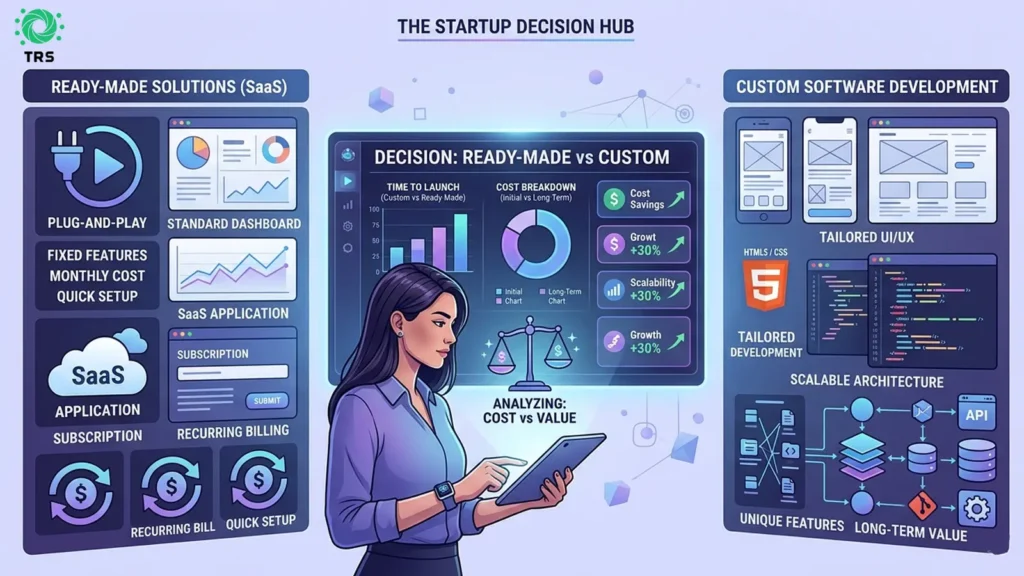
Startups operate in a fast-paced, highly competitive environment where every decision can directly influence growth, profitability, and long-term sustainability. One of the most important choices founders must make early on is whether to invest in custom software or rely on ready-made solutions. While both options offer distinct advantages, the real concern for most startups is cost, specifically, which option delivers better financial value over time.
Understanding how each approach impacts expenses, scalability, and operational efficiency is essential. With the support of strategic IT consulting solutions, startups can evaluate their unique requirements and choose a path that aligns with both their budget and long-term business vision.
What Are Ready-Made Software Solutions?
Ready-made software, often referred to as off-the-shelf solutions, are pre-built application designed to serve a broad audience. These tools are typically available on a subscription basis and can be deployed quickly without requiring significant technical expertise.
For startups with limited resources or tight deadlines, ready-made solutions can be extremely appealing. They allow businesses to start operations almost immediately, whether it’s managing customer relationships, handling accounting, or organizing project workflows.
One of the biggest advantages of ready-made tools is their low upfront cost. Many platforms offer free trials or affordable entry-level plans, making them accessible even for early-stage startups. However, while the initial investment is minimal, the long-term financial impact can be more complex. Subscription fees, premium features, integrations, and user-based pricing models often increase as the business scales.
To make an informed decision, startups must carefully evaluate the overall SaaS cost structure and determine whether ongoing expenses will remain sustainable as their operations grow.
Understanding Custom Software Development
Custom software is built specifically for a business, designed to meet its exact needs, workflows, and long-term goals. Unlike ready-made tools, it is not a one-size-fits-all solution, it is tailored to align perfectly with how a company operates.
By investing in Custom Software Development, startups gain access to systems that are optimized for efficiency and performance. This eliminates unnecessary features and ensures that every component of the software serves a purpose.
Although custom development requires a higher upfront investment, it offers significant long-term advantages. Businesses have full ownership of the software, meaning they are not tied to recurring subscription fees or external platform limitations. Additionally, custom solutions provide the flexibility to scale and adapt as the business evolves.
Cost Comparison: Short-Term vs Long-Term
Initial Investment
When comparing upfront costs, ready-made software is the clear winner. Most tools require little to no initial investment, making them ideal for startups with limited funding. Businesses can get started quickly without worrying about development expenses.
In contrast, custom software involves costs related to design, development, testing, and deployment. While this may seem expensive at first, it’s important to view it as a long-term investment rather than a one-time expense.
Ongoing Costs and Scalability
Ready-made solutions often rely on subscription-based pricing models. As your team expands or your requirements become more advanced, you may need to upgrade to higher plans or purchase additional features. Over time, these recurring costs can exceed the initial savings.
Custom software offers greater control over scalability. Businesses can enhance and expand their systems based on actual needs without being restricted by predefined pricing tiers. This makes it a more sustainable option for companies planning long-term growth.
Hidden Expenses
One of the most overlooked aspects of ready-made software is hidden costs. These can include:
- Integration limitations with other tools
- Data migration challenges
- Restricted customization options
- Additional fees for advanced features
Custom software reduces these risks by providing complete flexibility. With proper planning and expert guidance from IT consulting solutions, startups can avoid unexpected expenses and maintain better control over their budgets.
Why User Experience Matters in Cost Efficiency
User experience is often underestimated when evaluating software costs, yet it plays a critical role in overall efficiency. Poorly designed systems can lead to confusion, errors, and increased training time, all of which translate into higher operational costs.
This is where UI/UX Design services becomes essential. A well-structured interface allows users to perform tasks quickly and efficiently, reducing errors and improving productivity.
Ready-made solutions may not always align with your team’s workflow, which can create inefficiencies. On the other hand, custom software can be designed specifically for your users, ensuring a smoother experience and better performance across all operations.
Flexibility and Business Growth
Startups are constantly evolving. As they grow, their processes, goals, and technical requirements change. Flexibility, therefore, becomes a key factor when choosing software.
Ready-made tools often come with limitations that make it difficult to adapt to new business models. This can force companies to switch platforms or invest in additional tools, increasing costs and complexity.
Custom software provides unmatched flexibility. With tailored development, businesses can continuously improve their systems to match their growth and market demands. This adaptability not only supports innovation but also ensures long-term cost efficiency.
When Ready-Made Solutions Are the Right Choice
Despite their limitations, ready-made tools can be the right choice in certain situations. They are particularly useful for:
- Early-stage startups testing a business idea
- Companies with simple or standard operational needs
- Businesses that require quick deployment
In these cases, the low upfront cost and ease of use make ready-made solutions a practical option. They allow startups to focus on validating their ideas without making significant financial commitments.
When Custom Software Becomes the Better Investment
Custom software is often the better option for startups that are planning long-term growth and scalability. It becomes especially valuable when:
- The business requires unique or complex features
- Rapid scaling is expected
- Data security and control are critical
- Long-term cost savings are a priority
By leveraging IT consulting solutions, startups can determine the right time to transition from ready-made tools to custom-built systems, ensuring a smooth and cost-effective shift.
The Hybrid Approach: A Balanced Strategy
Many successful startups adopt a hybrid approach, combining the benefits of both options. They begin with ready-made tools to validate their ideas and later transition to custom software as their needs become more defined.
For example, a startup might initially use a SaaS platform for operations and then invest in custom development once it understands its workflows and customer requirements. This approach allows businesses to minimize risk while planning for long-term scalability.
Evaluating SaaS costs alongside custom development expenses helps startups create a balanced strategy that supports both short-term efficiency and long-term growth.
Final Verdict: Which Option Saves More Money?
There is no universal answer to this question, as the right choice depends on your startup’s goals, budget, and growth plans. However, a general pattern can be observed:
- Ready-made software is more cost-effective in the short term
- Custom software delivers greater value in the long term
Startups that focus on scalability, efficiency, and long-term savings often benefit more from investing in Custom Software Development.
Conclusion
Choosing between custom software and ready-made solutions is a critical decision that can shape the future of your startup. While ready-made tools offer convenience and affordability in the early stages, their limitations and recurring costs can become challenging as the business grows. Custom software, although requiring a higher initial investment, provides unmatched flexibility, scalability, and long-term cost efficiency. By combining expert guidance from IT consulting solutions and focusing on user-centric design through UI/UX Design, startups can build systems that truly support their growth journey. Ultimately, the best approach is to carefully evaluate your current needs, anticipate future growth, and choose a solution that aligns with your long-term vision. Making the right decision today can save high costs and unlock greater opportunities for success in the future.